
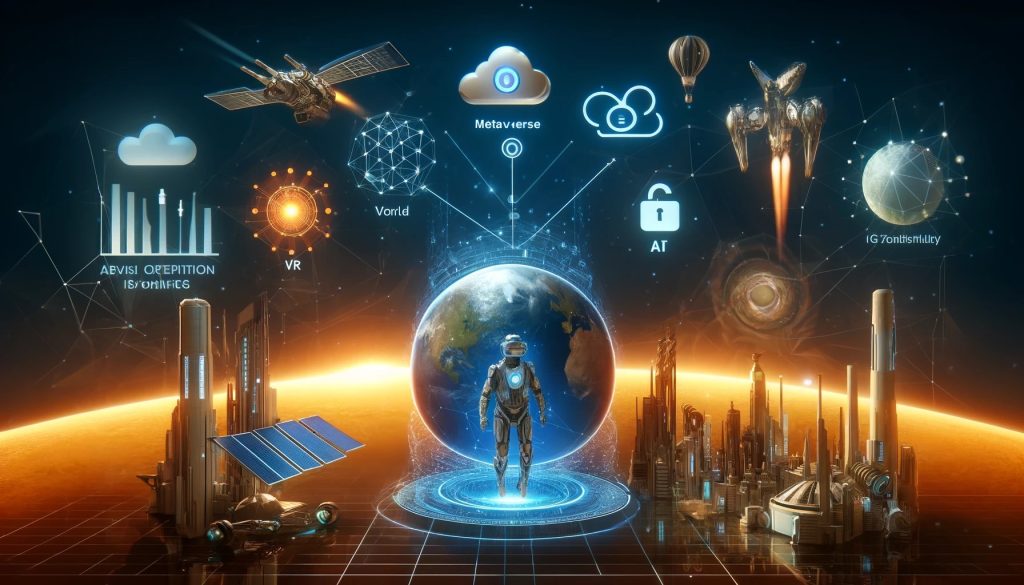
The metaverse is drawing much attention from technologists and futurists all over the world. Defined as a composite space where real and virtual elements merge, the metaverse is seen as a new area for human interaction, entertainment, business, and social connectivity. Anchoring this futuristic area are several key technologies that enable deep interactions and complex experiences. This writing looks into seven important technologies that are pushing the development of the metaverse nowadays.
Virtual Reality (VR)
Virtual Reality is very important technology in making the metaverse, giving users a very deep experience. Tools like the Oculus Rift or HTC Vive move people into three-dimensional spaces where they can move and act as though they are really there. This technology is very important for things like virtual tourism, where people can visit recreated places like ancient Rome or far planets without leaving their houses.
Key Points:
- VR headsets give deep visuals and sounds, making you feel like you are really there in digital worlds.
- They are used in fun, education, virtual travel, and showing real estate.
Augmented Reality (AR)
Different from the full dive provided by VR, Augmented Reality makes real world better by putting digital data on top of it. You can use AR through smartphones and devices like Google Glass, showing information and virtual objects right in front of your eyes. A practical use of AR in the metaverse is virtual showrooms, letting customers see how furniture would look in their houses before they buy it.
Highlight:
- “AR changes everyday places by adding digital info that helps people make decisions and interact in real time.”
Blockchain Technology
Blockchain acts as the base for many parts of the metaverse, especially in the areas of security and owning digital things. This spread-out technology makes sure that deals are safe and that digital things like virtual land or clothes for avatars are really owned by users. Blockchain’s clear way of working is very important in building trust among users, which is very important for the growing economies inside the metaverse.
Benefits of Blockchain in the Metaverse:
- Makes sure deals are safe and confirms who owns digital things.
- Helps build trust among users with its clear operations.
3D Modeling and Animation
Making the many different and detailed areas of the metaverse depends a lot on 3D modeling and animation. These technologies shape everything from big virtual lands to the small expressions on an avatar’s face. Tools like Blender and Autodesk Maya let designers make detailed models that look real and can be interacted with. For example, people who develop virtual real estate use 3D modeling to quickly make and change property designs that clients can see in three dimensions.
Practical Application:
- People who develop virtual real estate use 3D modeling to make and show property plans that clients can look at virtually.
Artificial Intelligence (AI)
Artificial Intelligence makes the environments in the metaverse better and makes experiences more personal for users. AI algorithms can manage complicated tasks, like controlling the actions of non-player characters in games or managing big virtual events. Also, AI is very important in looking at lots of data to make metaverse platforms work better and more stable.
Example:
- AI-powered characters in games react with smart actions and look real, which makes the gaming experience much better.
Cloud Computing
Cloud Computing gives the needed processing power and storage space for managing the big and complicated areas of the metaverse. By using the power of the cloud, metaverse platforms can support thousands of users at the same time, keeping operations smooth without the limits of local hardware. This is especially important for making real-time interactions possible and making sure the virtual worlds can grow.
Significance of Cloud Computing:
- Helps the metaverse grow easily, handling more users without losing performance.
- Makes sure updates and changes to the virtual world happen right away all over.
An example of cloud computing in the metaverse happens during big virtual events, like concerts or meetings. Here, the cloud’s ability to handle lots of data at the same time makes sure everyone has a smooth experience, no matter where they are.
Edge Computing
While cloud computing deals with big-scale data needs, Edge Computing is important for making delays very small by processing data closer to its use. This technology is needed to keep interactions in the metaverse quick, which is very necessary for a real and responsive experience for users.
Advantages of Edge Computing in the Metaverse:
- Greatly lowers delays in processing data, making sure that actions by users have fast effects in the virtual world.
- Makes the whole user experience better by reducing lag, very important for activities that need quick responses like virtual gaming or collaborative workspaces.
For example, in scenarios of virtual reality gaming, edge computing makes reaction times almost instant and the interactions more dynamic, which really feels like the real world and makes the gaming more immersive.
Integration and Innovation
Bringing these technologies together creates a system that lifts the metaverse from just a concept to a fully working digital universe. Innovations in VR, AR, AI, blockchain, cloud, and edge computing not only work together but also improve each other, making user experiences richer and growing what’s possible in the metaverse.
This mix of technology is clearly seen in places like Decentraland, where blockchain technology makes sure of the ownership of digital real estate, AI fills the environment with interactive content, and cloud services make sure these virtual lands stay consistent and scalable for users everywhere.
Conclusion
The metaverse is at the top of digital innovation, pushed by amazing technologies that change how we interact with the digital world. As these technologies keep getting better and work more together, the possibilities of the metaverse grow, offering unmatched chances for creativity, connecting people, and business. The coming time of the metaverse is set to bring more deep, interactive, and new experiences that could really change everyday life. By embracing these advanced technologies, both developers and users are moving into a new time of digital discovery and expansion.
FAQs
While all the mentioned technologies are needed, Virtual Reality (VR) is the base, providing the deep experiences that define the metaverse.
VR gives users a full dive into a digital environment, whereas AR makes the real world better by adding virtual elements on top of it.
Yes, the spread-out nature of blockchain makes sure that user data and digital things are managed in a safe and clear way, increasing both privacy and trust.
AI handles complicated tasks, makes dynamic content, and personalizes how users interact, really making the creation process and user engagement better.
Edge computing cuts down on delays, allowing for real-time interactions and quick responses, which are needed to keep a smooth and deep user experience in the metaverse.