
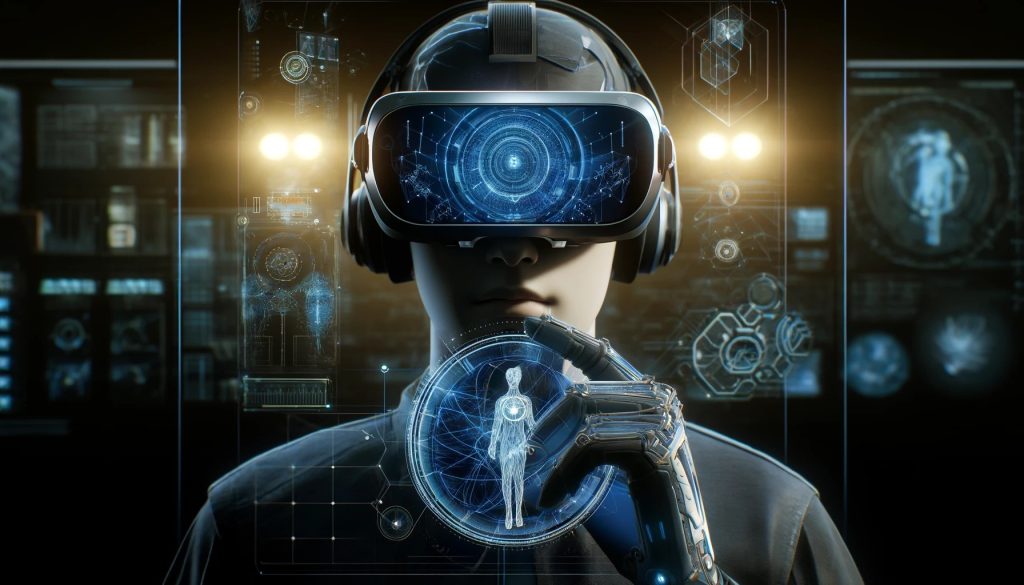
Step into universe where attending live concerts, exploring stunning landscapes, or connecting with friends globally from your living room becomes reality. This is the allure of the Metaverse, a seamlessly integrated digital and physical reality realm. To dive into this captivating world, specific devices are esential. This article unveils the key technologies enabling entry and interaction within the Metaverse.
Types of Metaverse Devices
Virtual Reality (VR) Devices
Virtual Reality devices transport users into a digital realm, offering a fully immersive experience that feels almost tangible. These primarily include headsets that shield you from the external world and project a three-dimensional space. Notable VR headsets, like the Oculus Quest, enhance gaming and social interactions by acurately mapping user movements in real-time. Another standout, the Sony PlayStation VR, is tailored for gamers, delivering top-notch visuals and sound to enrich virtual realities.
Augmented Reality (AR) Devices
Contrasting VR, Augmented Reality devices superimpose digital data onto the real world, enriching your immediate environment with digital elements. Devices such as the Microsoft HoloLens project holographic images directly into your line of sight. Simpler devices like smartphones and tablets also offer AR capabilities, useful in various sectors from complex industrial applications to everyday tasks like navigation.
How Devices Enhance the Metaverse Experience
Immersion and Interaction
The efficacy of a Metaverse device profoundly influences the depth of immersion and level of interaction within the virtual environments. VR headsets, for example, are designed to offer lifelike presence, with advanced systems tracking everything from user locomotion to eye movements, mirroring these in the virtual world for a highly interactive experience. AR devices, meanwhile, augment user interaction with the real world by layering it with digital information, thereby enhancing comprehension and enjoyment.
Accessibility and Usability
For Metaverse technology to be widely adopted, accessibility is essential. The spectrum includes expensive, setup-intensive headsets like the Valve Index, which is praised for its superb tracking accuracy and display, as well as more approachable choices like the Oculus Quest 2, which offers a great mix of price, quality, and usability.
Leading Metaverse Web Sites
Choosing from the myriad of available devices can be overwhelming; therefore, understanding the leaders in the space can guide potential users:
- VR Headsets for Complete Immersion: PC connections are necessary for devices like the HTC Vive Pro or Valve Index, which offer the highest level of immersion because to their precise tracking and high-resolution screens.
- AR for a Mixed Reality Experience: Although it costs more, the Microsoft HoloLens provides cutting-edge mixed reality experiences for anyone who want to improve their real-world surroundings.
Each device serves different aspects of the Metaverse, and the choice largely depends on the type of virtual experience sought. Whether immersing completely in a digital world or enhancing the physical with digital overlays, these technologies are rapidly evolving, making such experiences more integrated and immersive.
Choosing the Right Device
Selecting the right Metaverse device involves several considerations to ensure optimal personal or professional use:
- Cost: There’s a significant price disparity across Metaverse devices. The Oculus Quest 2 presents an economical entry into VR, whereas the Microsoft HoloLens, due to its advanced capabilities, is a more considerable investment.
- Comfort and Usability: Given that these devices are often used for extended periods, comfort is paramount. Features such as adjustable straps, weight distribution, and cushioning are critical.
- Technical Specifications: The realism and fluidity of the virtual world are greatly enhanced by higher resolutions and faster refresh rates. Enthusiasts often prefer devices like the Valve Index and HP Reverb G2 for their superior visual and tracking capabilities.
- Intended Use: The choice of device also depends on the intended application. Gamers may prefer devices such as the Sony PlayStation VR due to its strong gaming ecosystem, whereas professionals might choose devices like the HoloLens for their beneficial applications in design, training, or collaboration.
Selecting the right Metaverse device is essential as it directly affects the immersive experiences’ quality and the extent of interaction available in these virtual worlds.
Conclusion
The Metaverse brings forth a new digital era, where the boundaries between the real and virtual realms are becoming less defined, providing endless possibilities for fun, learning, and business. The gadgets we choose to enter the Metaverse greatly improve our experiences by serving as gateways to these new worlds. As technology progresses, these gadgets will become increasingly complex, blurring the line between reality and virtual reality, and incorporating the Metaverse into our everyday routines.
FAQs
Virtual reality devices transport users into a completely digital world, disconnecting them from the real world. On the other hand, augmented reality devices enrich the physical world by superimposing digital data without substituting the natural surroundings.
Yes, smartphones can access simpler Metaverse versions through AR applications and basic VR experiences using compatible headsets. However, they provide less immersion than dedicated AR or VR devices.
For those who are new to VR, the Oculus Quest 2 offers a reasonably priced solution that strikes a mix between usefulness and affordability. For augmented reality, cellphones with ARKit or ARCore installed are affordable possibilities.
Devices that combine AR and VR, such as the Microsoft HoloLens, allow for interactive experiences in a more realistic environment by superimposing virtual items on the real world.
Creating believable and immersive Metaverse experiences requires high-quality screens and spatial audio. They improve the authenticity and complexity of virtual settings, creating interactions that seem more realistic and captivating.